
Comprehensive Guide to Irrigation: What is Irrigation? A Detailed Explanation
Irrigation is a vital component of modern agriculture, playing a crucial role in crop production and water management. Efficient irrigation systems enable farmers to supply their crops with the right amount of water at the right time, enhancing growth and reducing waste.

The concept of irrigation encompasses a broad range of techniques and technologies designed to optimize water use. By understanding the principles of irrigation, individuals can better appreciate its significance in food production and environmental conservation.
Key Takeaways
- Irrigation is essential for modern agriculture.
- Efficient irrigation systems enhance crop growth.
- Irrigation techniques optimize water use.
- Understanding irrigation is crucial for food production.
- Irrigation plays a role in environmental conservation.
Understanding Irrigation: Definition and Basic Concepts
At its core, irrigation is about understanding and managing water distribution to enhance agricultural productivity. Irrigation involves supplying land with water through various means to support plant growth, particularly in areas where rainfall is scarce or unpredictable.

The Science Behind Water Movement in Soil
The movement of water through soil is a critical aspect of irrigation. It involves understanding how water penetrates the soil, is retained, and becomes available to plants.
Capillary Action and Percolation
Capillary action refers to the ability of water to flow through the soil's pore spaces, while percolation is the downward movement of water through the soil profile. Both processes are essential for delivering water to plant roots.
Water Retention Capacity
Water retention capacity is the soil's ability to hold water against the force of gravity. Soils with high water retention capacity, like clay soils, can hold more water, reducing the need for frequent irrigation.
Key Terminology in Irrigation Systems
Understanding key terms is vital for designing and managing effective irrigation systems. Terms like drip irrigation, sprinkler systems, and subsurface irrigation refer to different methods of water application.
Other important concepts include water distribution uniformity, which measures how evenly water is applied across the irrigated area, and irrigation scheduling, which involves planning when and how much to irrigate based on crop needs and weather conditions.
The Historical Evolution of Irrigation
The evolution of irrigation is a story of human ingenuity and adaptation to environmental challenges. Over time, irrigation practices have transformed significantly, influenced by technological advancements, environmental factors, and societal needs.
Ancient Irrigation Methods
Ancient civilizations developed innovative irrigation systems to support agriculture. For example, the Egyptians used the Nile River to irrigate their lands, while the Chinese developed complex systems involving canals and dikes. Similarly, in the Americas, the ancient Sumerians and other cultures implemented sophisticated irrigation techniques.
"The Nile, the lifeblood of Egypt, was harnessed by ancient Egyptians through a system of canals and basins, showcasing early irrigation ingenuity."
Modern Developments in Irrigation Technology
Modern irrigation has seen significant technological advancements, including the use of drip irrigation, precision agriculture, and automation. These innovations have improved water efficiency and crop yields. For instance, drip irrigation delivers water directly to the roots of plants, reducing evaporation and runoff.
| Technology | Description | Benefits |
|---|---|---|
| Drip Irrigation | Delivers water directly to plant roots | Reduces water loss, increases efficiency |
| Precision Agriculture | Uses technology to optimize crop yields | Improves crop health, reduces waste |

Qu'est-ce que l'irrigation en détail ?: A Detailed Look at Irrigation Processes
Effective irrigation requires a comprehensive approach, including the selection of appropriate water sources and distribution methods. Irrigation processes are critical in agriculture, as they directly impact crop yield and water conservation.
Water Sources for Irrigation
The choice of water source is a crucial aspect of irrigation. There are primarily two types of water sources used for irrigation: surface water and groundwater.
Surface Water Resources
Surface water resources include rivers, lakes, and reservoirs. These sources are often replenished by rainfall and snowmelt, making them a renewable option for irrigation. However, their availability can be seasonal, and quality can vary.
Groundwater Utilization
Groundwater is another vital source for irrigation. It is accessed through wells and tube wells. Groundwater is generally more reliable than surface water, as it is less affected by seasonal changes. However, over-extraction can lead to depletion and land subsidence.
Water Distribution Mechanisms
Once the water source is identified, the next step is to distribute the water effectively. Various mechanisms are used, including gravity-fed systems, pressurized systems, and drip irrigation.

The choice of distribution mechanism depends on factors such as the type of crop, soil characteristics, and topography. Efficient water distribution is key to minimizing water loss and ensuring that crops receive adequate moisture.
Types of Irrigation Systems
Understanding the various types of irrigation systems is crucial for efficient water use in both agricultural and domestic contexts. Different irrigation methods cater to specific needs, environments, and crop types, ensuring optimal water distribution.
Surface Irrigation Methods
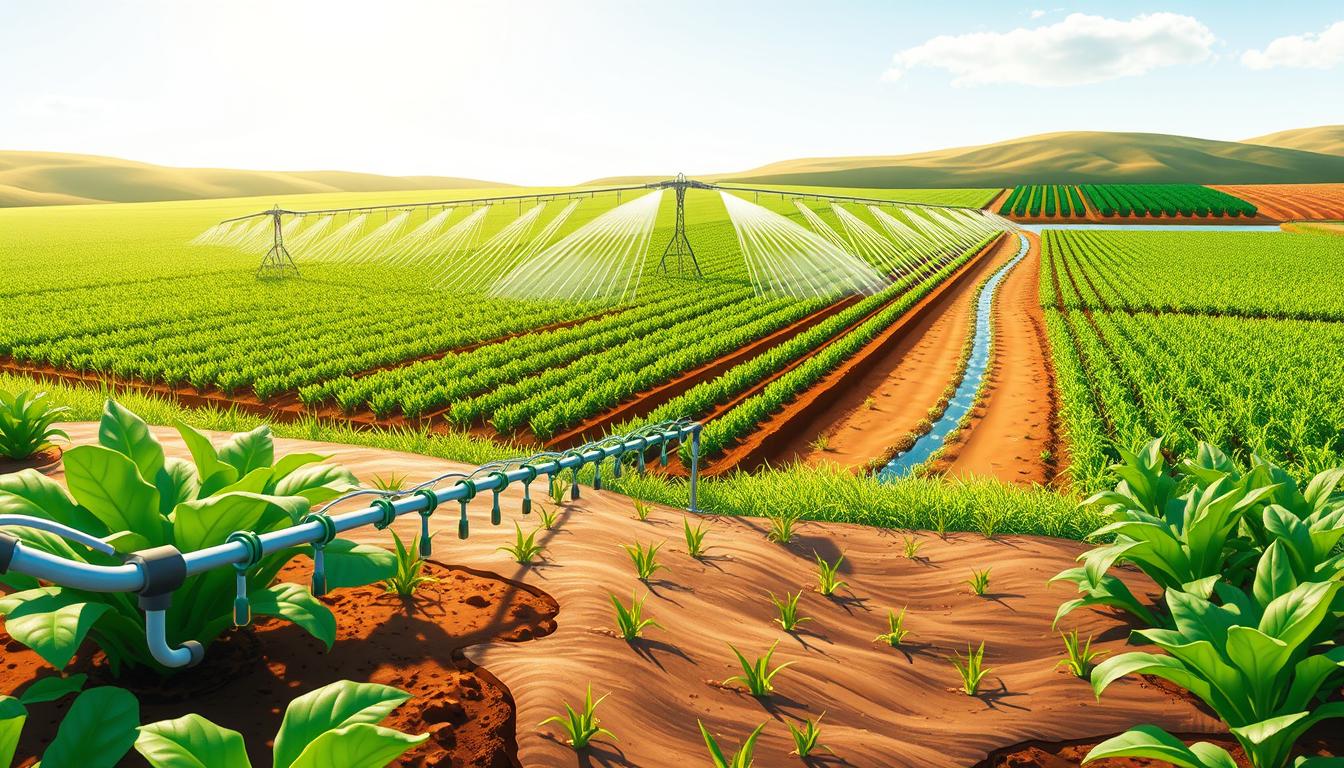
Surface irrigation involves applying water to the surface of the soil, which then infiltrates and percolates to the root zone of the crops. This method is further divided into:
Flood Irrigation
Flood irrigation involves covering the entire surface of the land with water. It's one of the oldest and simplest methods, often used for crops like rice. However, it can lead to waterlogging and is not suitable for all soil types.
Furrow Irrigation
Furrow irrigation involves creating channels or furrows between crop rows, allowing water to flow through them. This method is effective for row crops and can be more water-efficient than flood irrigation.
Sprinkler Irrigation Systems
Sprinkler irrigation mimics rainfall by distributing water through a network of pipes and sprinklers. This method is versatile and can be used for a wide range of crops and landscapes.
Fixed and Rotating Sprinklers
Fixed sprinklers remain stationary, while rotating sprinklers move in a circular motion to cover a wider area. Both types are used based on the specific requirements of the area being irrigated.
Center Pivot Systems
Center pivot irrigation involves a sprinkler system that rotates around a central pivot point, efficiently irrigating large circular areas. This method is particularly popular in large-scale agricultural operations.
Drip and Micro-Irrigation
Drip or micro-irrigation delivers water directly to the base of the plants, drop by drop, minimizing evaporation and runoff. This method is highly efficient and suitable for areas with limited water resources.
Subsurface Irrigation Techniques
Subsurface irrigation involves placing irrigation pipes or tubes below the soil surface, delivering water directly to the root zone. This method reduces evaporation and runoff, improving water efficiency.
As noted by irrigation experts, "The choice of irrigation system depends on factors like crop type, soil characteristics, and climate conditions." Effective irrigation planning is key to maximizing water use efficiency.
| Irrigation Method | Description | Advantages |
|---|---|---|
| Surface Irrigation | Involves applying water to the soil surface | Simple, low cost |
| Sprinkler Irrigation | Mimics rainfall through sprinklers | Versatile, efficient |
| Drip Irrigation | Delivers water directly to plant roots | Highly efficient, reduces runoff |
| Subsurface Irrigation | Places irrigation pipes below soil surface | Reduces evaporation, improves efficiency |
Irrigation in Different Settings
Effective irrigation is crucial in diverse settings, including agriculture, residential areas, and commercial landscapes. The importance of watering plants cannot be overstated, as it directly impacts their health and productivity. Different environments require tailored irrigation approaches to maximize water efficiency and minimize waste.

Agricultural Irrigation Practices in the United States
In the United States, agricultural irrigation is a significant user of water resources. Farmers employ various irrigation methods, including sprinkler and drip irrigation, to optimize water distribution and reduce evaporation. The choice of irrigation system depends on factors such as crop type, soil characteristics, and climate conditions. For instance, drip irrigation is particularly effective for crops like tomatoes and peppers, as it delivers water directly to the roots.
Residential Lawn and Garden Irrigation
Residential lawn and garden irrigation focuses on maintaining aesthetic appeal while conserving water. Homeowners can adopt best practices for watering plants, such as using rain sensors and drip irrigation systems. These methods help reduce water waste and promote healthy plant growth. Additionally, selecting drought-resistant plants can minimize the need for frequent watering.
Commercial Landscaping Irrigation Solutions
Commercial landscaping irrigation solutions are designed to balance visual appeal with water efficiency. Businesses and property managers can implement smart irrigation controllers that adjust watering schedules based on weather conditions. This approach not only conserves water but also reduces maintenance costs. Furthermore, using efficient irrigation systems can enhance the overall appearance of commercial landscapes.
By understanding the specific irrigation needs of different settings, individuals and organizations can make informed decisions to optimize water use. Whether in agriculture, residential areas, or commercial landscapes, effective irrigation practices are essential for sustainability and environmental stewardship.
Benefits of Proper Irrigation
The benefits of proper irrigation extend beyond just crop yield improvement to include significant water conservation and economic advantages. Effective irrigation systems are designed to deliver water directly to the roots of plants, reducing evaporation and runoff.
Crop Yield Improvement
Proper irrigation significantly enhances crop yields by providing plants with the right amount of water at the right time. This consistent moisture level promotes healthy plant growth and maximizes agricultural productivity.
Water Conservation Benefits
Irrigation, when done efficiently, contributes to water conservation by minimizing waste and ensuring that water is used optimally. Modern irrigation techniques, such as drip irrigation, deliver water directly to the plant's roots, reducing evaporation and runoff.
| Irrigation Method | Water Conservation Level | Crop Yield Impact |
|---|---|---|
| Drip Irrigation | High | Significant Increase |
| Sprinkler Irrigation | Medium | Moderate Increase |
| Surface Irrigation | Low | Variable Impact |
Economic Advantages of Efficient Irrigation
Efficient irrigation systems not only conserve water but also provide economic advantages by reducing the energy and labor costs associated with water delivery. Improved crop yields and water savings contribute to increased profitability for farmers.
By adopting proper irrigation practices, farmers and agricultural businesses can reap multiple benefits, from improved crop yields to significant economic returns, all while contributing to sustainable water use.
Irrigation Planning and Design
Planning and designing irrigation systems require a comprehensive understanding of various factors including water requirements, soil type, and climate. Effective irrigation planning is essential for optimizing water use and ensuring the health of crops and landscapes.
Assessing Water Requirements
Assessing the water requirements of crops or landscapes is a critical step in irrigation planning. This involves understanding the specific water needs based on factors such as crop type, growth stage, and local climate conditions. Accurate assessment helps in designing a system that delivers the right amount of water at the right time.
Soil Considerations in Irrigation Design
Soil plays a significant role in irrigation design. Understanding soil characteristics is crucial for determining its water-holding capacity and drainage properties.
Soil Texture Analysis
Soil texture analysis is vital as it affects the infiltration rate and water-holding capacity. For instance, sandy soils have higher infiltration rates but lower water-holding capacities compared to clay soils.
Drainage Characteristics
Drainage characteristics are also important to prevent waterlogging. Soils with poor drainage may require special irrigation designs to avoid root zone saturation.
Climate Factors Affecting Irrigation Needs
Climate factors such as temperature, humidity, and rainfall significantly impact irrigation needs. For example, areas with high temperatures and low humidity require more frequent irrigation. Understanding these factors helps in designing a system that is responsive to the local climate.
| Climate Factor | Impact on Irrigation | Design Consideration |
|---|---|---|
| Temperature | Higher temperatures increase evapotranspiration | Increase irrigation frequency |
| Humidity | Low humidity increases water loss | Adjust irrigation schedule based on humidity levels |
| Rainfall | Rainfall can supplement irrigation needs | Implement rain sensors to optimize irrigation |
Best Practices for Watering Plants
The art of watering plants involves more than just supplying water; it's about providing the right amount at the right time. Effective watering practices are crucial for maintaining healthy plants, optimizing irrigation systems, and conserving water.
Optimal Watering Schedules
Developing an optimal watering schedule is key to ensuring plants receive the right amount of water. This involves understanding the specific water needs of different plants, soil types, and climate conditions. Watering during the early morning or late evening can reduce evaporation and ensure more water reaches the roots.
- Check soil moisture by inserting a finger into the soil.
- Adjust watering frequency based on weather conditions.
- Use a drip irrigation system for efficient water delivery.
Avoiding Common Watering Mistakes
Many gardeners and farmers make common mistakes when watering plants, such as overwatering or underwatering. Overwatering can lead to root rot and other problems, while underwatering can cause stress and reduce yields. It's essential to monitor soil moisture and adjust watering practices accordingly.
- Avoid watering during peak sun hours.
- Ensure good drainage to prevent waterlogging.
- Use mulch to retain soil moisture.
Seasonal Adjustments to Irrigation Practices
Seasonal changes significantly impact irrigation needs. Adjusting irrigation practices according to the season can help optimize water use and plant health.
Summer Irrigation Strategies
During summer, plants typically require more water due to higher temperatures and evaporation rates. Increasing watering frequency or using shade cloth to reduce stress can be beneficial.
Winter Considerations
In winter, plants generally require less water due to cooler temperatures and reduced growth. Reducing watering frequency and ensuring good drainage can help prevent water-related issues.
Troubleshooting Common Irrigation Problems
Troubleshooting is a critical aspect of maintaining an irrigation system, ensuring it operates at peak efficiency. Irrigation systems can be complex, involving various components that work together to distribute water effectively. However, issues can arise, impacting the system's performance and water distribution.
Identifying System Malfunctions
Identifying malfunctions in an irrigation system is the first step towards troubleshooting. Common signs include uneven water distribution, leaks, and clogged emitters or sprinklers. To identify these issues, inspect the system regularly, looking for signs of wear, damage, or blockages. Check the system's controller and valves for proper operation, and ensure that the water pressure is within the recommended range for the specific irrigation components.
- Inspect valves and pipes for leaks or damage.
- Check the controller for correct programming and operation.
- Examine emitters and sprinklers for clogging or wear.
Addressing Uneven Water Distribution
Uneven water distribution is a common issue that can lead to overwatering in some areas and underwatering in others. To address this, adjust the sprinkler heads or emitters to ensure they are properly aligned and not obstructed. Also, check the water pressure to ensure it's appropriate for the type of irrigation system in use. In some cases, installing pressure-regulating valves can help maintain consistent water pressure throughout the system.
Dealing with Clogging and Maintenance Issues
Clogging is a frequent problem in irrigation systems, particularly in drip irrigation, where small emitters can become blocked by debris. Regular maintenance is key to preventing clogging. This includes cleaning filters regularly and inspecting the system for signs of wear or damage. Flushing the system periodically can also help remove sediment and debris that may cause clogging.
- Regularly inspect and clean filters.
- Flush the irrigation system to remove debris.
- Replace worn or damaged components.
By following these troubleshooting tips and maintaining the irrigation system regularly, you can ensure it operates efficiently, providing the right amount of water to plants without waste. Effective troubleshooting not only saves water but also reduces the overall cost of irrigation, making it a crucial aspect of irrigation management.
Conclusion: The Future of Irrigation in Sustainable Agriculture
Irrigation plays a vital role in modern agriculture, and understanding ما هو الري بالتفصيل is crucial for its effective implementation. As we've explored throughout this article, irrigation is not just about supplying water to crops; it's about doing so in a way that maximizes efficiency, minimizes waste, and promotes sustainable practices.
The benefits of irrigation are multifaceted, ranging from improved crop yields to water conservation. By adopting advanced irrigation technologies and techniques, farmers and landscapers can significantly enhance their water usage efficiency, leading to economic advantages and reduced environmental impact.
As we look to the future, the importance of irrigation in sustainable agriculture will only continue to grow. With the global population projected to increase, the demand for food production will rise, making efficient irrigation practices more critical than ever. By embracing innovative irrigation solutions and best practices, we can ensure a more sustainable and food-secure future.
The potential for growth and improvement in irrigation is vast, driven by ongoing research and technological advancements. As we move forward, it's essential to continue exploring new methods and strategies that support the benefits of irrigation while addressing the challenges posed by climate change, water scarcity, and environmental concerns.
FAQ
What is irrigation and why is it important?
Irrigation is the artificial application of water to land for agricultural, landscaping, or other purposes. It's crucial for crop growth, water conservation, and economic benefits.
What are the different types of irrigation systems?
Common types include surface irrigation, sprinkler irrigation, drip irrigation, and subsurface irrigation. Each has its own advantages and is suited for specific applications.
How do I determine the best irrigation schedule for my plants?
The optimal watering schedule depends on factors like soil type, climate, and plant species. It's essential to consider these factors and adjust your irrigation schedule accordingly.
What are some common mistakes to avoid when watering plants?
Overwatering, underwatering, and inconsistent watering can harm plants. It's also important to avoid watering during peak sun hours and to use the right irrigation equipment.
How can I conserve water while still maintaining a healthy irrigation system?
Implementing efficient irrigation systems, such as drip irrigation, and using rain sensors or soil moisture sensors can help conserve water.
What are the benefits of using drip irrigation?
Drip irrigation delivers water directly to the roots, reducing evaporation and runoff, and promoting healthy plant growth.
How often should I inspect and maintain my irrigation system?
Regular inspections and maintenance are crucial to ensure the system operates efficiently and effectively. Check for leaks, clogging, and other issues regularly.
Can irrigation be used in different settings, such as agriculture and landscaping?
Yes, irrigation is used in various contexts, including agriculture, residential landscaping, and commercial landscaping, each with its unique requirements and challenges.
What are the economic benefits of efficient irrigation practices?
Efficient irrigation can lead to increased crop yields, reduced water consumption, and lower energy costs, resulting in significant economic benefits.
How does climate affect irrigation needs?
Climate factors, such as temperature, precipitation, and evaporation rates, significantly impact irrigation needs. Understanding these factors is essential for developing effective irrigation plans.



0 Comments